 1 / 3
1 / 3AquaShield Turbo RO Purifier
The six stages, with a pump that ignores your water pressure.
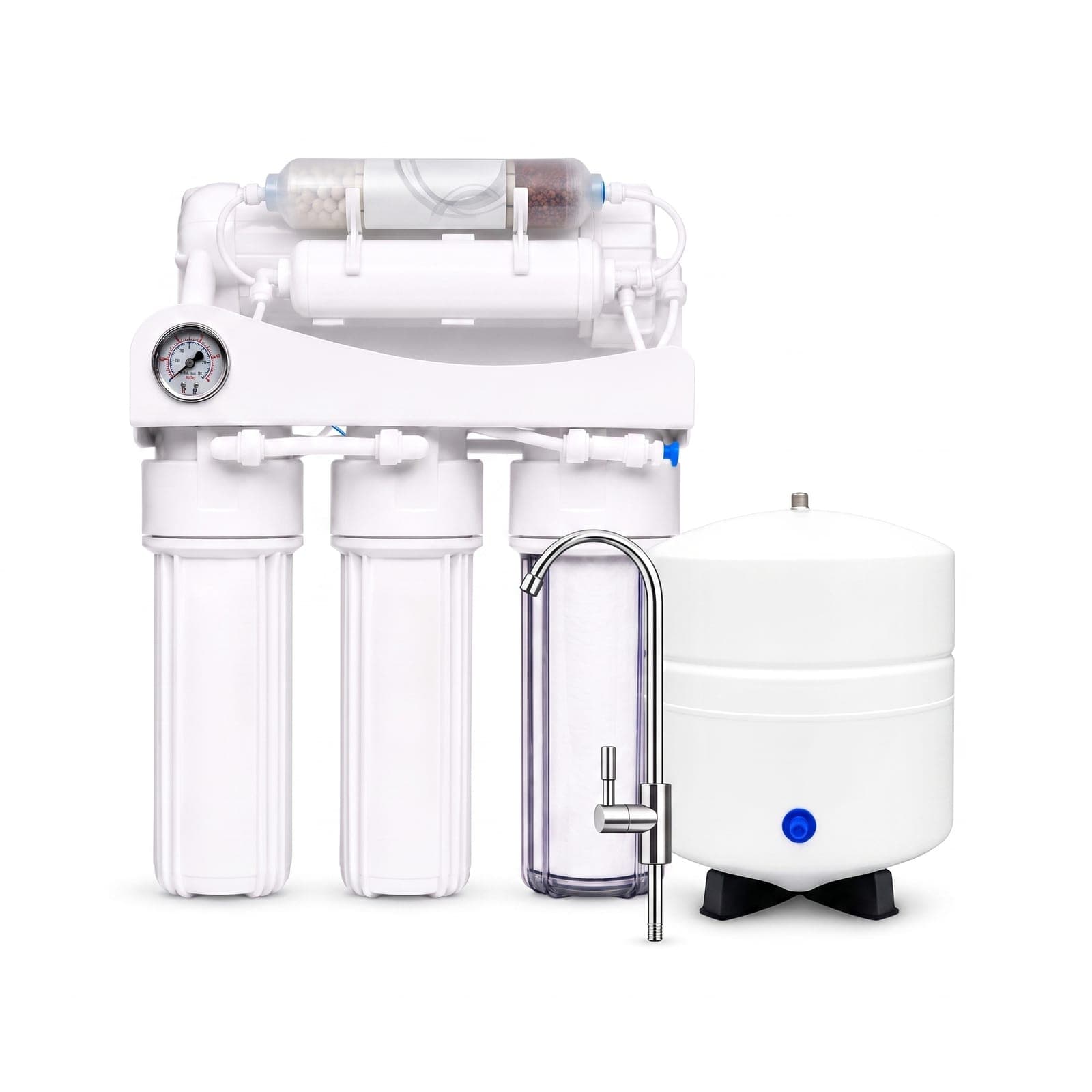
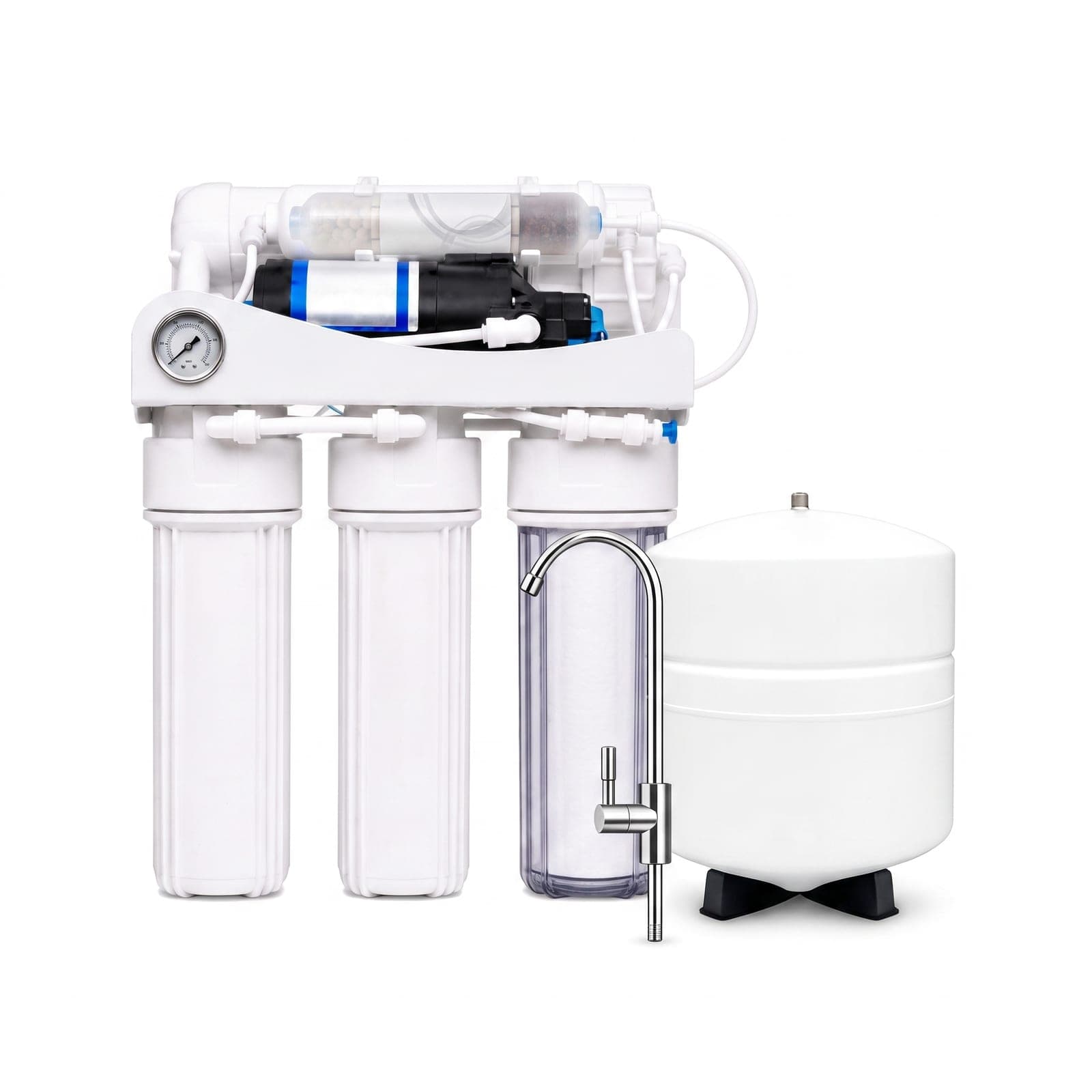
The AquaShield with a 24 volt booster pump on the bracket. Low municipal pressure, a tank and pump supply, or a house at the end of the line: the pump lifts the feed to the pressure the membrane is designed for, so the tank fills in an hour instead of an afternoon and the membrane rejects what it should.
You save R550
- Sold and fitted by Andy Plumbers across Johannesburg
- Free courier to major centres
- Ships within 24 hours of payment
- 30-day returns on anything unused
- First Sip Promise: the best tap water you have had or your money back, when fitted by Andy Plumbers or a qualified plumber. How it works
When you need the pump
A reverse osmosis membrane is a pressure device. At 4 bar it makes its rated 378 litres a day and rejects about 96% of the dissolved solids. At 2 bar it makes a third of that and rejects less, and at 1.5 bar most systems barely trickle. Evening pressure in many Johannesburg and Pretoria suburbs sits below 3 bar; tank and pump supplies often sit below 2.
The Turbo carries a 24 volt diaphragm booster pump, its transformer, and two pressure switches. The low-pressure switch stops the pump if the feed runs dry; the high-pressure switch stops it when the tank is full. You hear a soft hum for a few minutes after you draw water, then nothing.
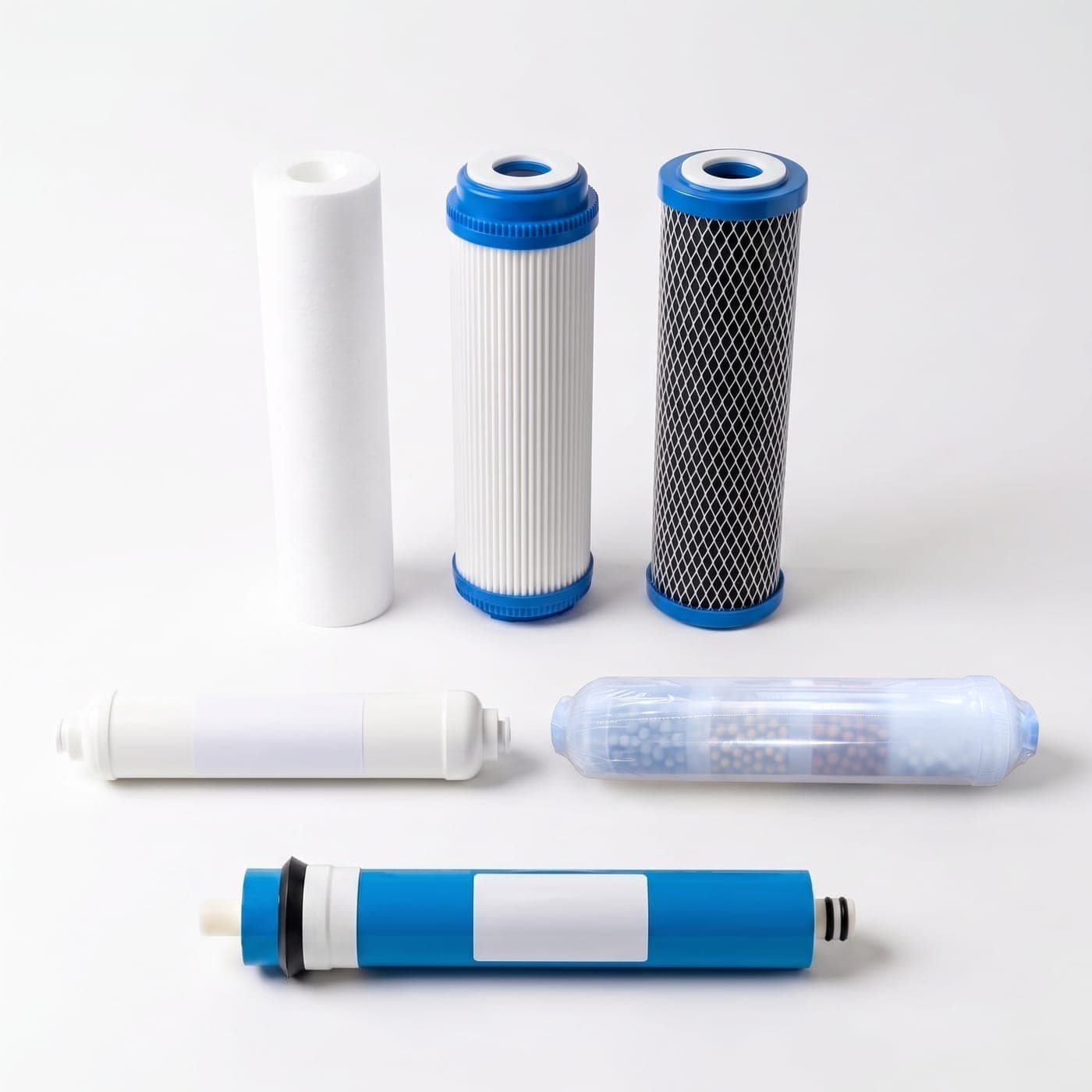
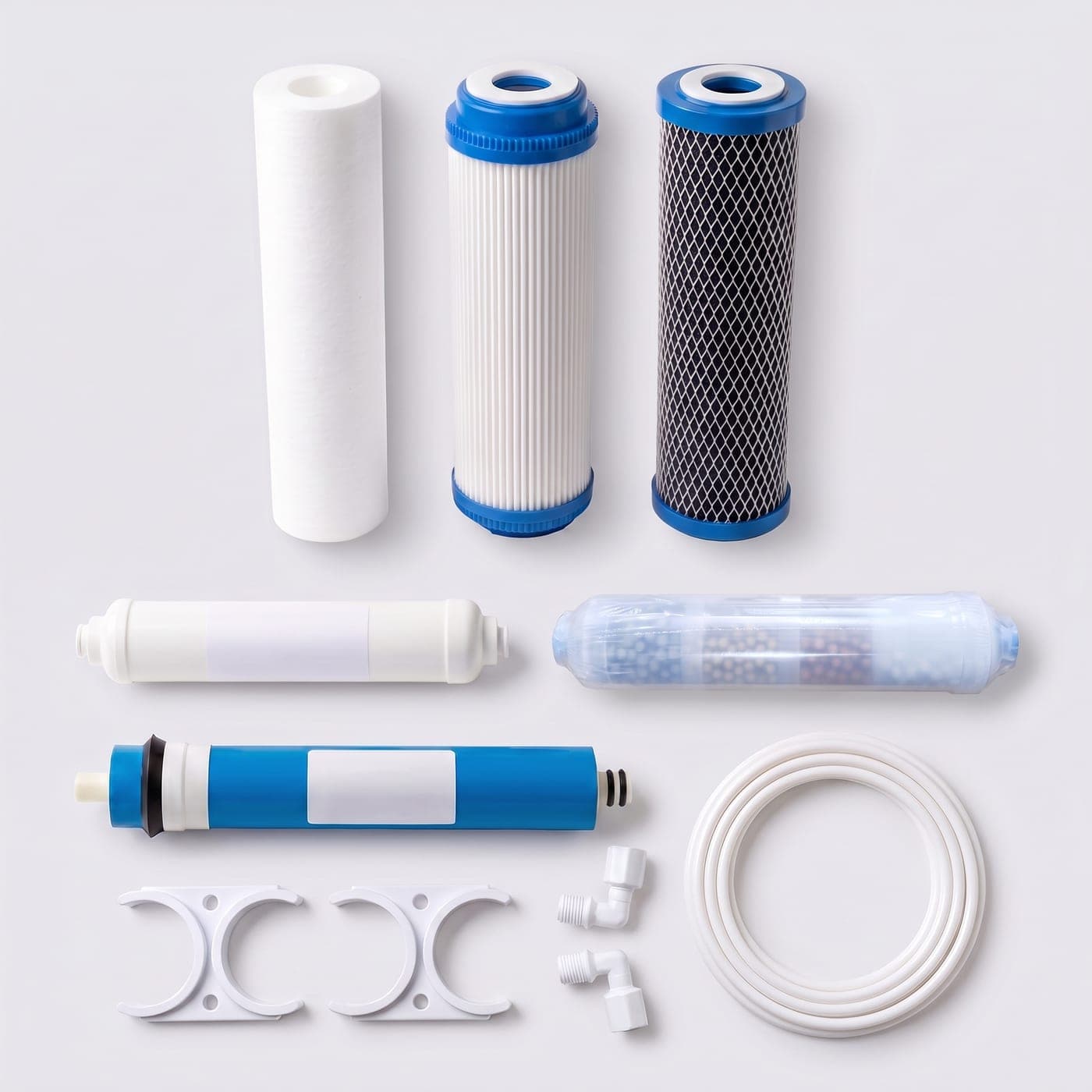
The six stages, in order
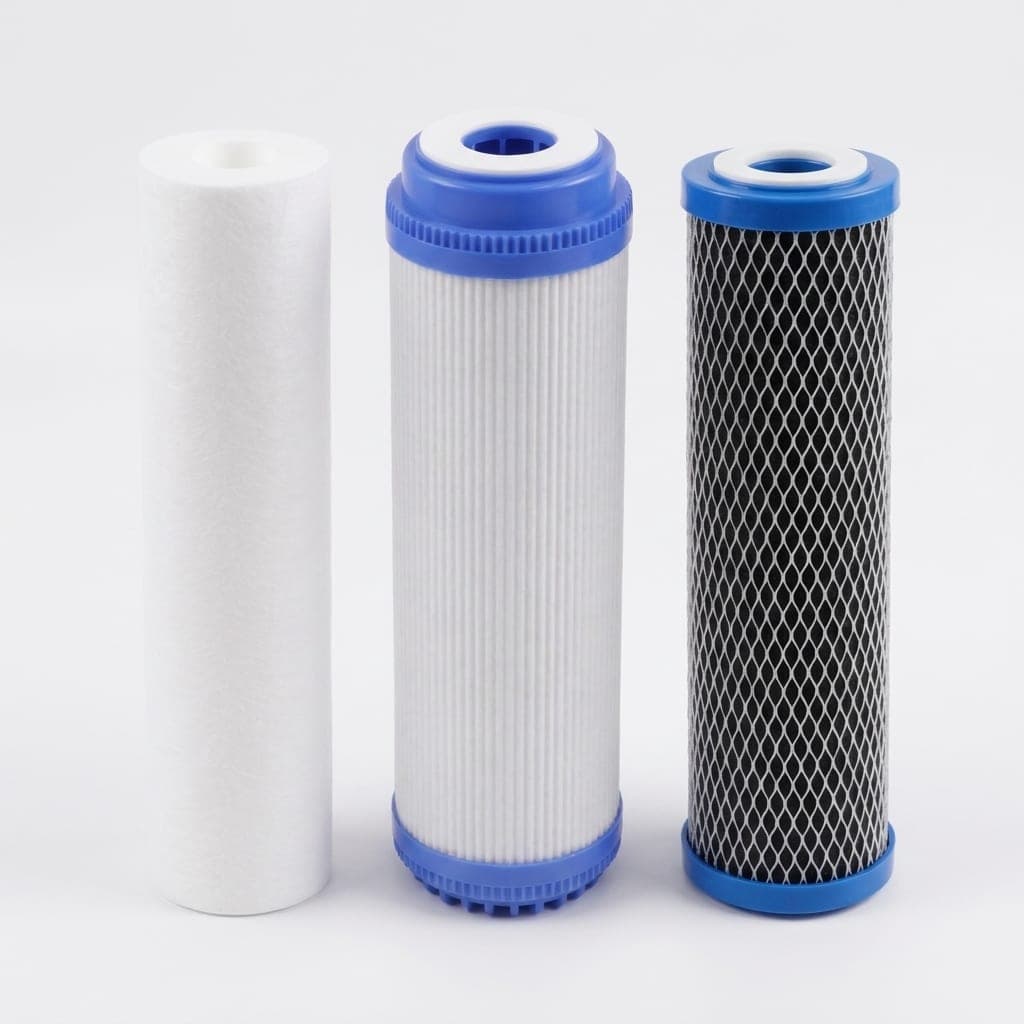
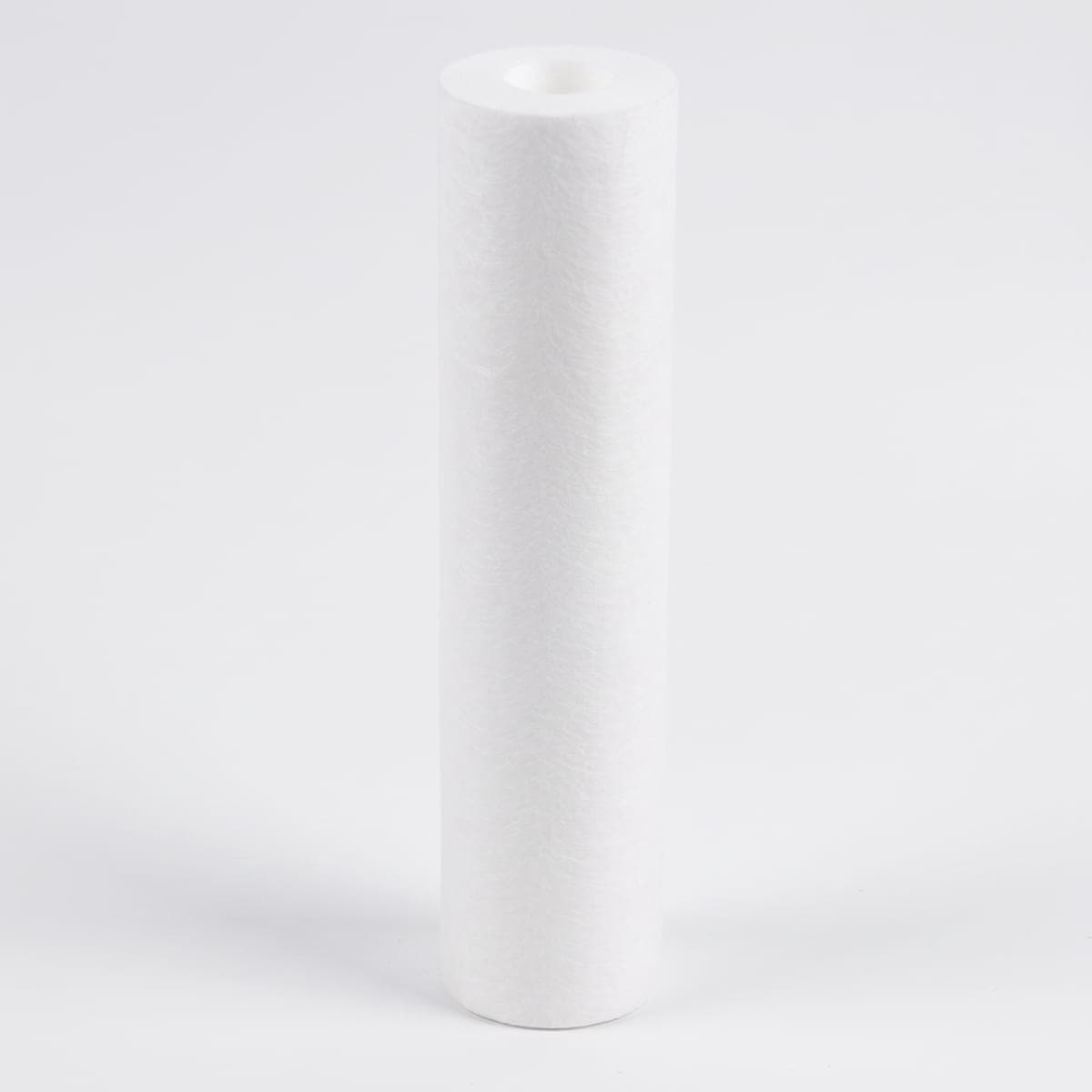
- 5 micron sediment. Sand, rust and silt from the pipes, so the carbon stages stay clean.
- Granular activated carbon. Chlorine, chemical taste and smell.
- Carbon block, 5 micron. The finer chemical pass, and protection for the membrane, which chlorine destroys.
- 100 GPD reverse osmosis membrane. Dissolved solids, heavy metals, nitrates, fluoride, microplastics, bacteria and viruses, down to 0.0001 micron. About 96% of what was dissolved in the water goes to the drain instead of the glass.
- Inline post-carbon. A final taste pass between the tank and the tap.
- 4-in-1 re-mineraliser. Maifan stone, mineral stone, bio-ceramic and far-infrared media. Calcium and magnesium go back in, the pH settles, and the taste arrives.
What it needs under the sink
A cold water feed under the sink (the connector fits a standard 15 mm tap connection), a waste pipe to clip the drain saddle onto, and a 12 mm hole for the tap, drilled in the counter or borrowed from an existing sprayer or soap-dispenser hole. The assembly stands 51 cm tall on a 43 by 46 cm footprint, and the tank needs a space about 28 cm wide and 37 cm tall beside it.
The pump needs a plug point within 1.5 m of the cupboard for its transformer.
Fitting takes most people an hour with the printed guide and the video we email. If you would rather not, Andy Plumbers, our own team, fits it anywhere in Johannesburg: send a photo of the cupboard on WhatsApp and we quote the same day.
What it costs to run
Two sediment and carbon changes a year (the pre-filter kit), a new post-carbon and re-mineraliser once a year, and a membrane every two to three years (the full service kit is the box for that year). Added up at the prices in the replacement filters category, a year of cartridges costs about what a family that buys two 5 litre bottles a week spends on bottled water in three months, for every glass, kettle and pot in the house. The pump draws about 30 watts while it runs, an hour or two a day, which is a few rand a month on the electricity bill.
The First Sip Promise
If the AquaShield is not the best tasting water you have had from a tap, tell us within 30 days of delivery and we refund you in full, installed and used. We arrange and pay for the collection.
The promise applies when the purifier is fitted by Andy Plumbers or a qualified plumber, following the guide: a drain line on the wrong port or a membrane in backwards is not something the product can fix. Fitted it yourself? It is still covered if it arrives faulty, damaged or wrong; the taste promise is for purifiers a plumber fitted. How it works.