
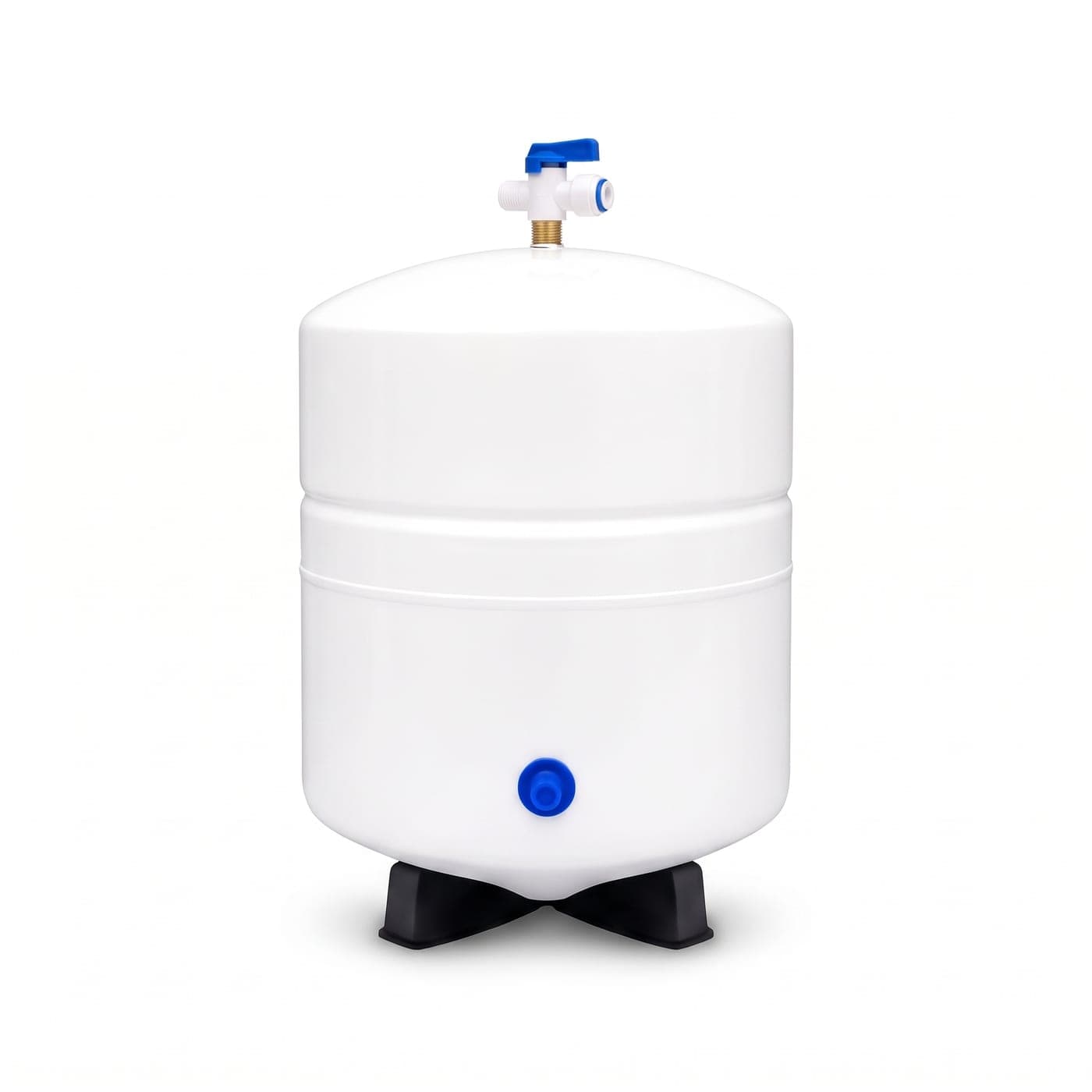
12 Litre RO Storage Tank, Steel, with Tank Valve
Twelve litres of tank, seven litres of water. That is how every RO tank works.
The 12 litre steel storage tank that stands beside the AquaShield, and beside nearly every under-sink reverse osmosis system sold in South Africa: a pressurised shell with a food-grade rubber diaphragm inside, an air charge of 0.5 to 0.8 bar under it, and the 1/4 inch tank valve on top. It holds about 7 litres of purified water ready at the tap and refills itself. When the tap slows to a dribble after a glass, or water comes out of the air valve at the base, the diaphragm has gone and this is the part.
Not sure it fits? Send a photo on WhatsApp
- Sold and fitted by Andy Plumbers across Johannesburg
- Courier quoted at checkout, free on orders over R1 500
- Ships within 24 hours of payment
- 30-day returns on anything unused
- First Sip Promise: the best tap water you have had or your money back, when fitted by Andy Plumbers or a qualified plumber. How it works
How 12 litres of tank gives you 7 of water
Inside the steel shell is a rubber diaphragm with air under it, charged at the factory to about 0.7 bar. Water from the membrane pushes the diaphragm down and squeezes the air; open the tap and the air pushes the water back out. The system stops filling when the tank pressure reaches about two thirds of the feed pressure, so at 4 bar of mains pressure about 7 litres go in and about 7 come out. At 2.5 bar it is less, which is one more reason low-pressure homes want the Turbo.
Three signs the old tank is finished
The tap runs well for a glass and then slows to a dribble, though the system has had hours to fill: the air charge has leaked away. Water comes out of the air valve at the base when the cap is off and the pin is pressed: the diaphragm has split. The tank feels full and heavy but gives nothing at the tap: both. The first has a cheap fix worth trying before buying a tank; the other two do not.
Try the pump first
Close the feed valve and the tank valve, open the tap and let the tank run empty. Take the cap off the air valve at the base and read it with a tyre gauge: 0.5 to 0.8 bar (7 to 10 psi) with the tank empty. Below that, pump it up with a bicycle pump, a few strokes at a time, and never past 0.8 bar. A tank that holds its charge for a month was only flat. One that is down again in a week, or that spits water from the air valve, has a split diaphragm, and this is the part.
Fitting it
- Close the feed valve and the tank valve on the old tank. Open the tap until it stops.
- Press the collet on the old tank valve in and pull the 1/4 inch tube out.
- Wrap three turns of thread tape clockwise around the thread on top of the new tank and screw the tank valve on by hand, then a quarter turn with a spanner. The thread is small; more than that cracks the valve.
- Push the tube into the new valve until it stops, open the tank valve, open the feed, and give the system two hours to fill.
- Run the first tankful to the drain through the tap. A new tank has a faint rubber taste on its first fill and none after.
Fits any under-sink RO
Every under-sink reverse osmosis system sold in South Africa connects its tank the same way: 1/4 inch tube into a 1/4 inch tank valve, five stages or six, pump or no pump. The 12 litre is the size the AquaShield ships with and the size most other systems do. It stands 23 cm across and 38 cm tall, plus the valve, so it takes the cupboard space the old one had.
Before you buy.
Goes with it.
Whole shop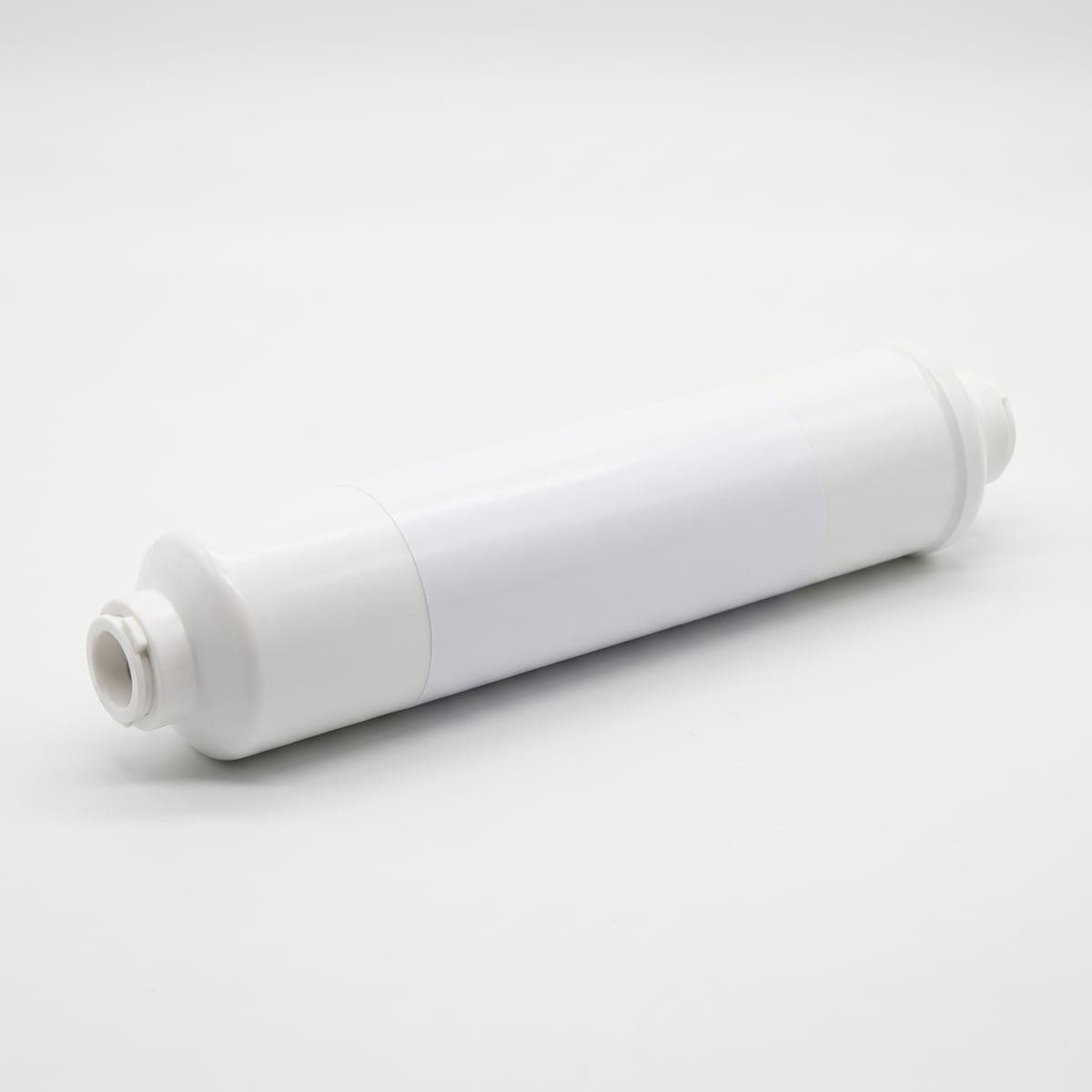
Inline Post-Carbon Filter
Stage five. The taste pass between the tank and the tap.
 Free courier
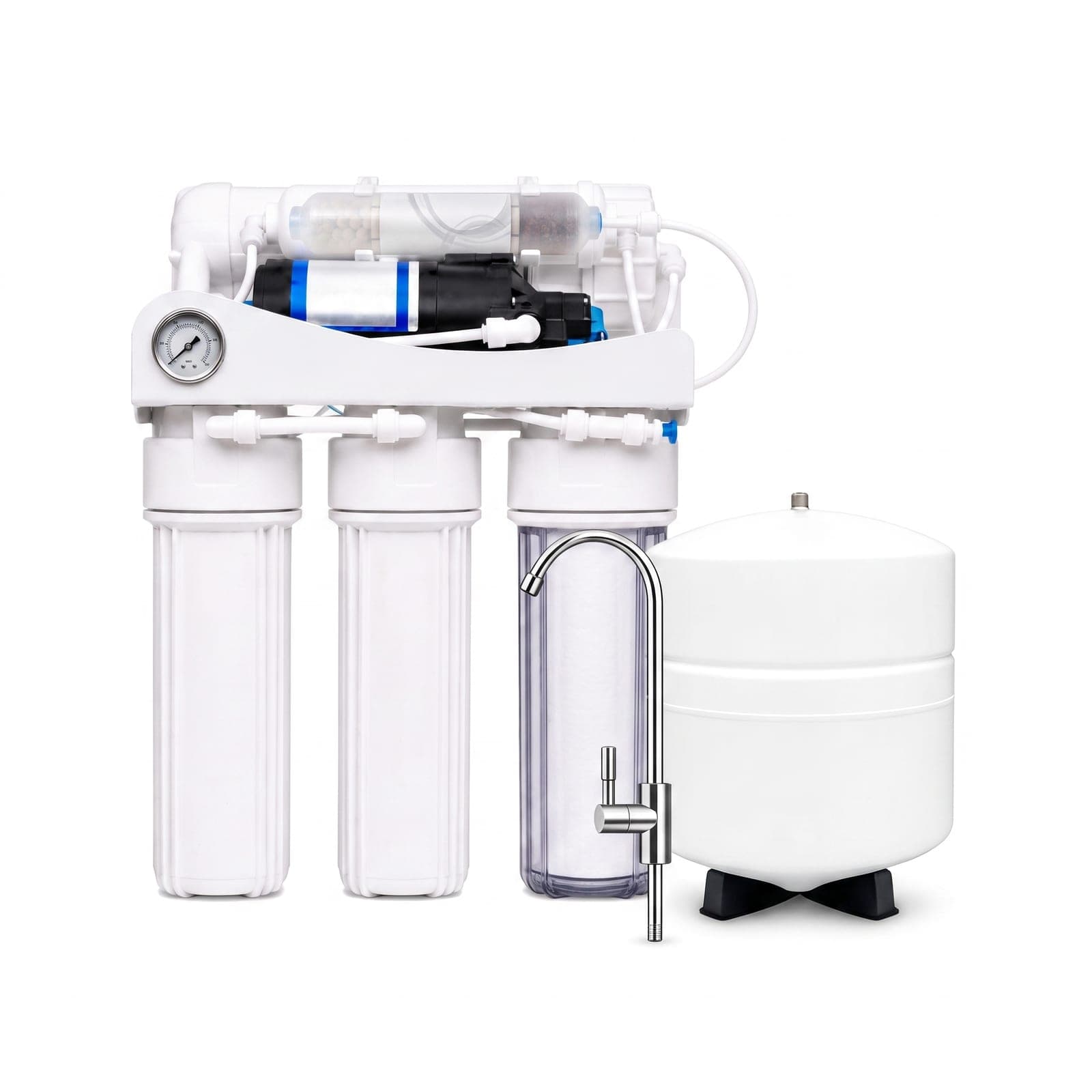
AquaShield Turbo RO Purifier
The six stages, with a pump that ignores your water pressure.
 Free courier
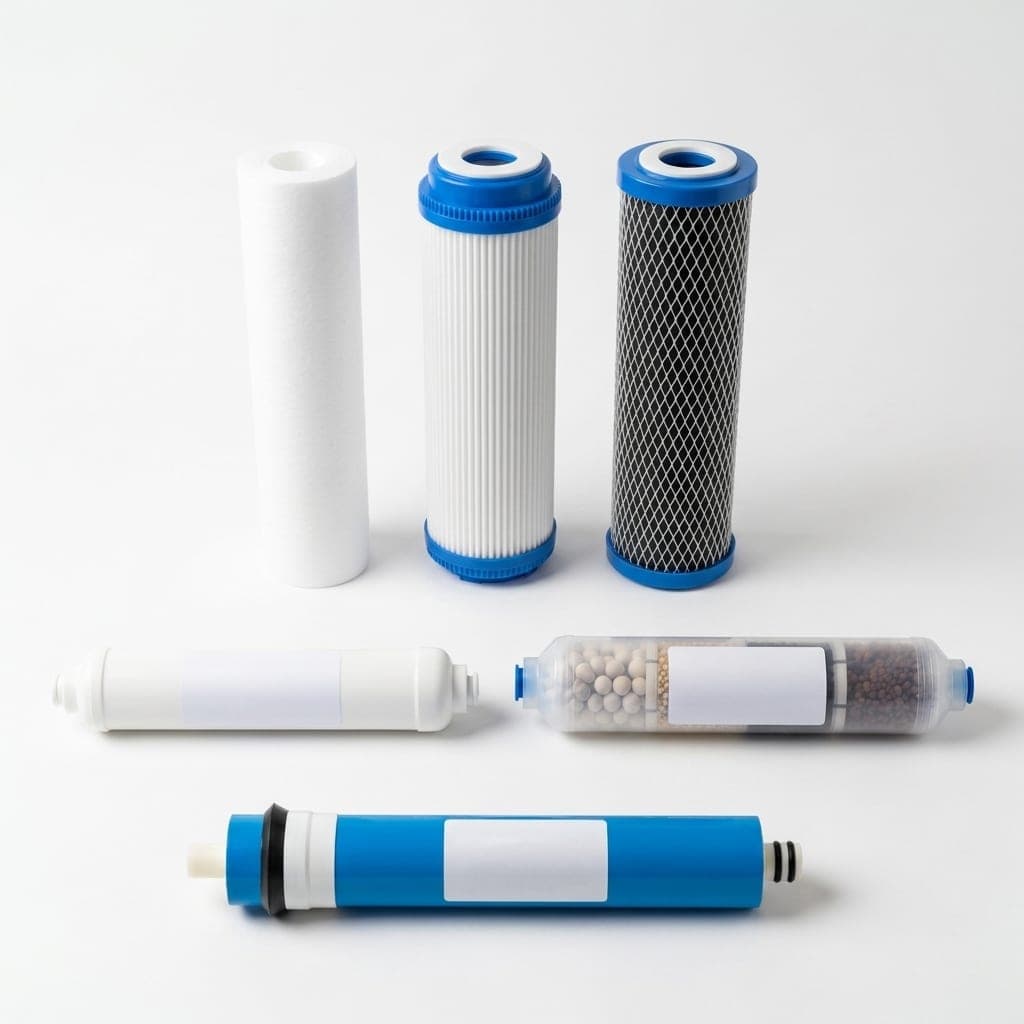
AquaGuard Whole-House Filter
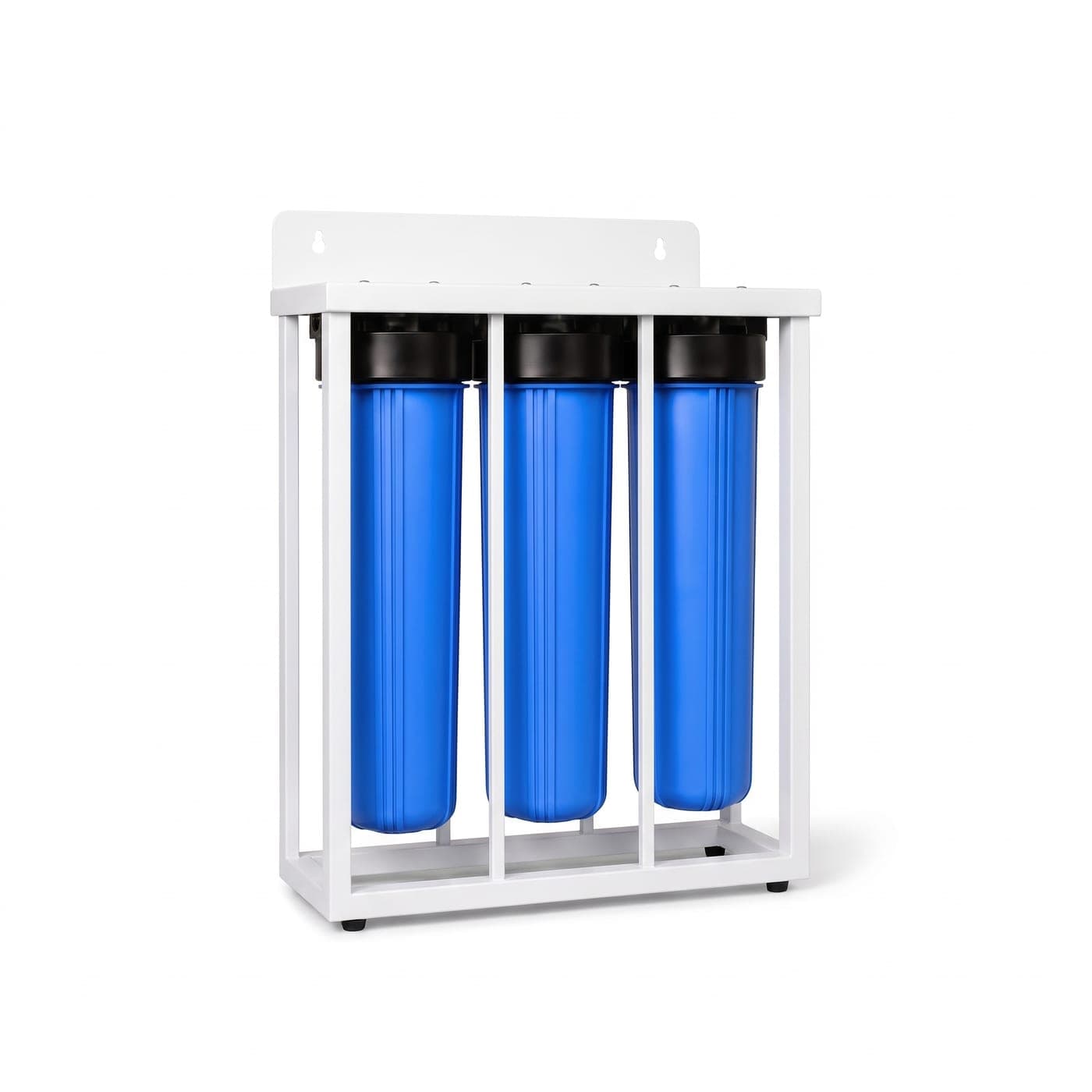
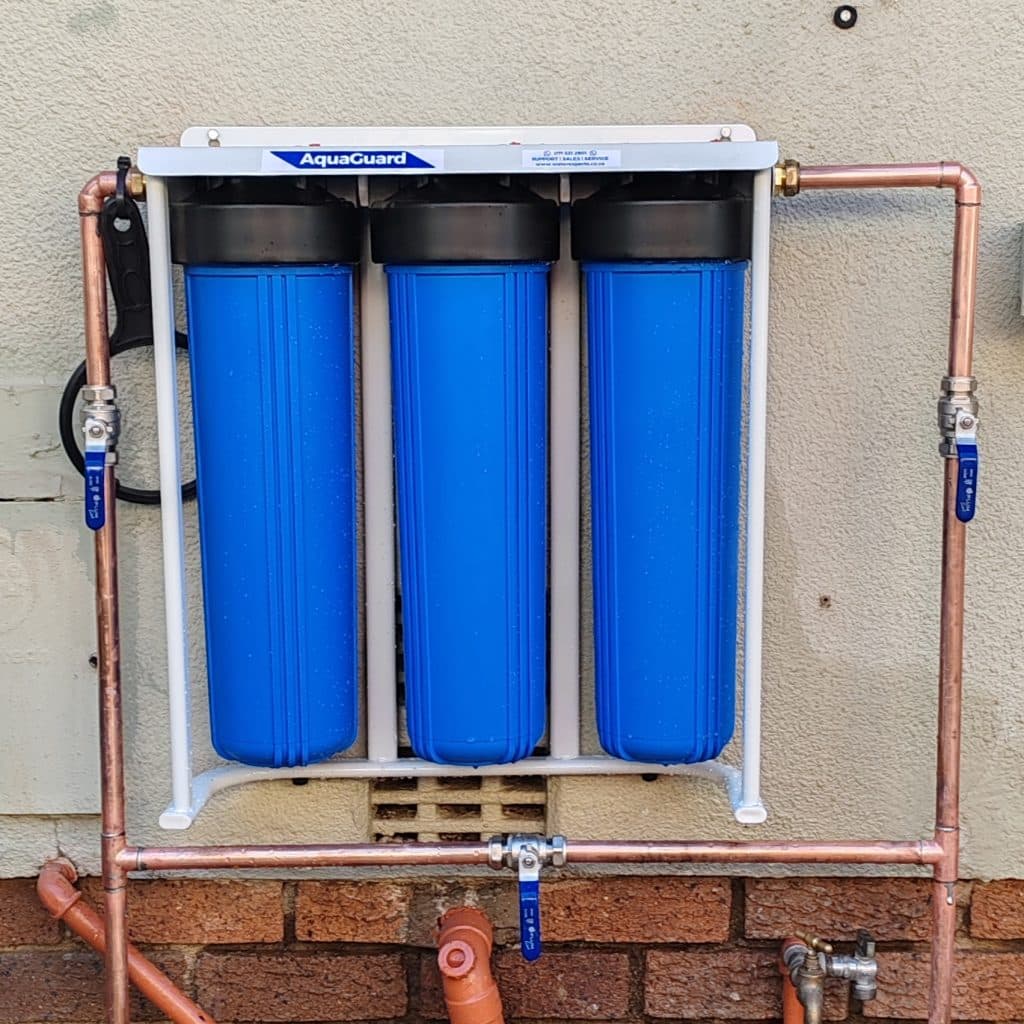
Every tap, every shower, every appliance. On a white steel frame.