Big Blue 20 inch cartridges explained: sediment, carbon block, GAC and 1 micron
Four cartridges fit the same 20 by 4.5 inch housing and do four different jobs. What each one does, the order they go in, and how to tell when they are full.

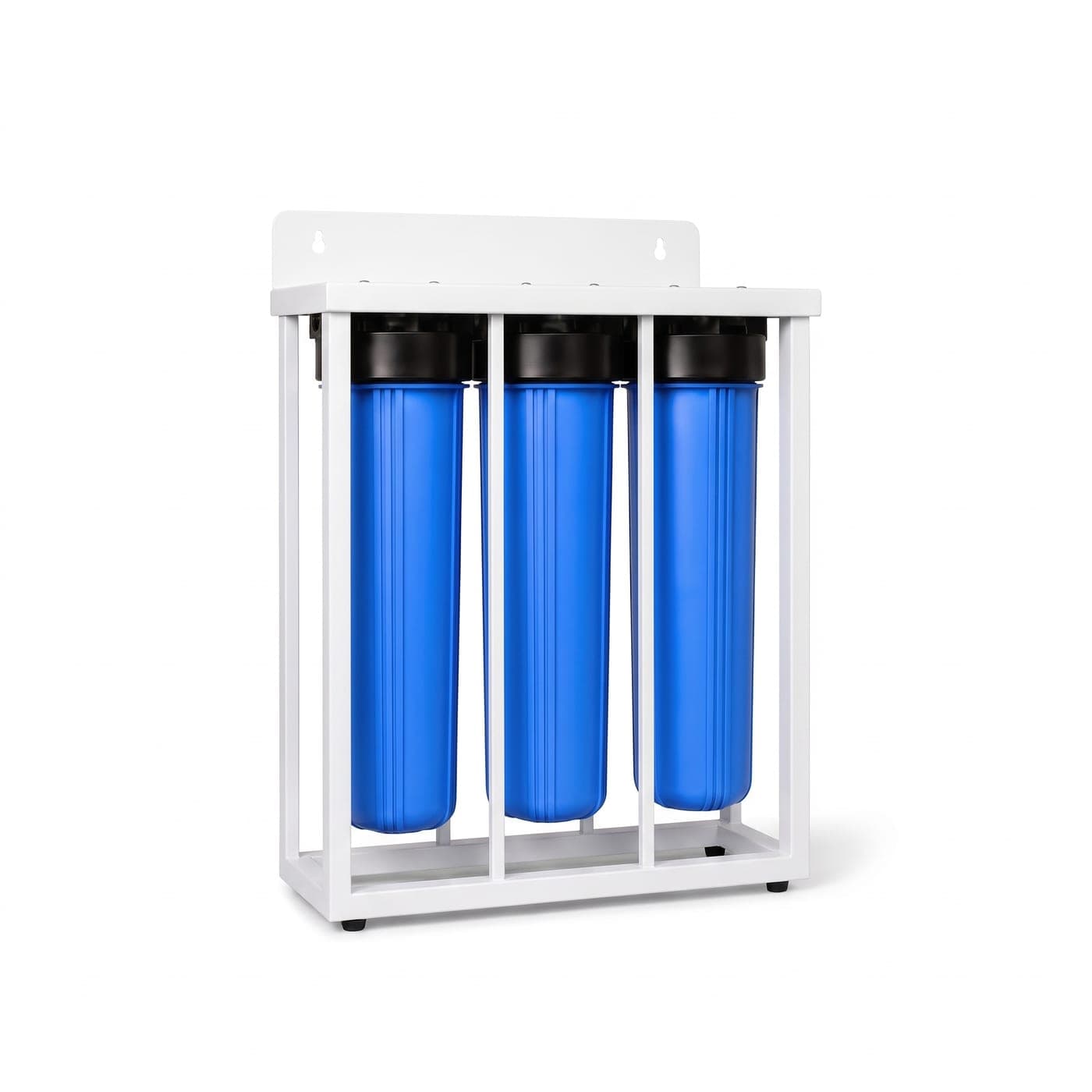
Big Blue is a size, not a brand: a cartridge 20 inches long and 4.5 inches across (508 by 114 millimetres) and the housing built around it. Whoever moulded the housing, the cartridges are interchangeable. Four kinds fit it and do four different jobs, and the order they go in matters more than the name on the box.
What does Big Blue mean?
The 20 inch Big Blue housing is the standard for whole-house filtration in South Africa, because it passes a whole house's flow, about 45 litres a minute, without choking it. The AquaGuard is three of them on a steel frame. If you are not sure what you have, measure the old cartridge: about 51 cm long and 11.5 cm across is Big Blue. About 25 cm long and 6.5 cm across is the 10 inch standard used under the sink, which has its own guide.
The four cartridges, and what each one does
| Cartridge | Rating | Takes out | Housing | Change |
|---|---|---|---|---|
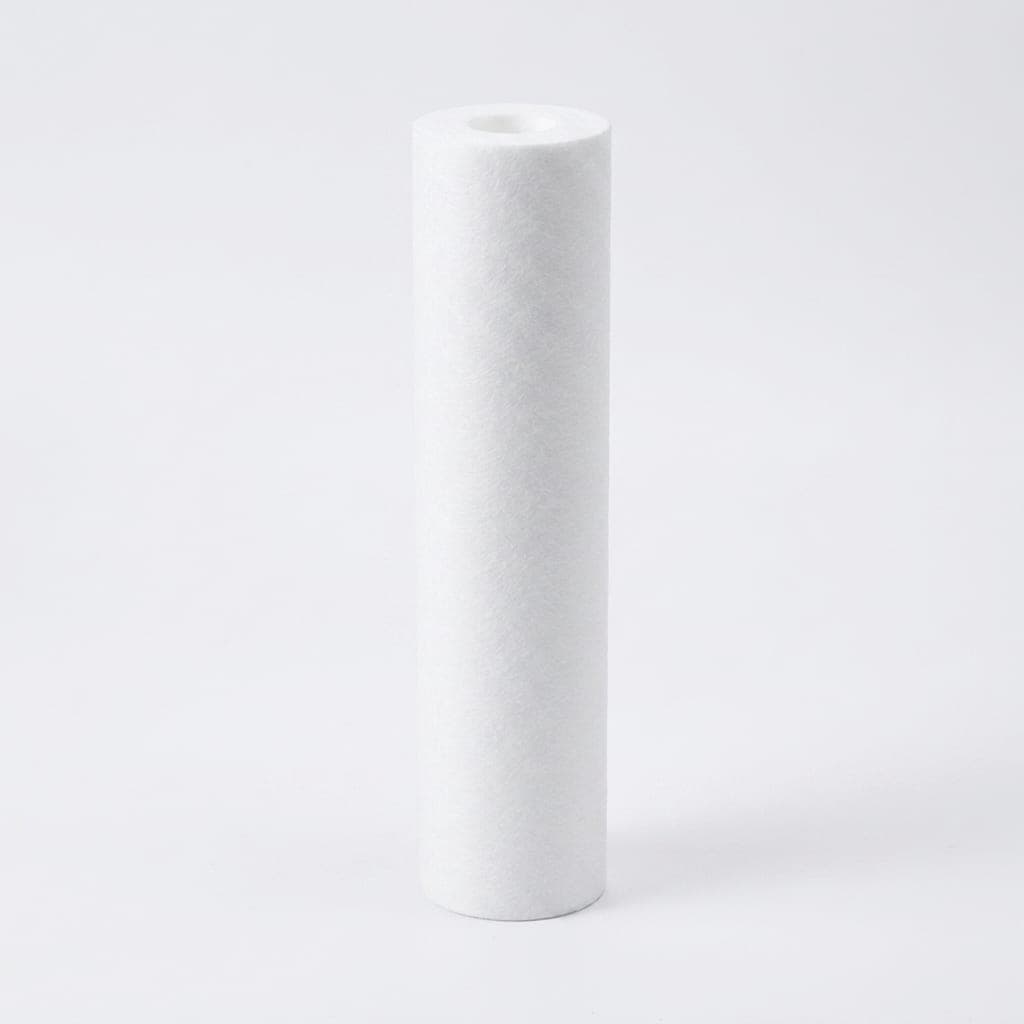
| 5 micron sediment, melt-blown polypropylene | 5 micron nominal | Sand, rust, silt, the visible load | First | 6 months, sooner on a borehole |
| Carbon block, extruded coconut-shell carbon | 5 micron | Chlorine, chemical taste and smell, organics | Second | 6 months |
| GAC, granular activated carbon | Loose carbon, no micron rating | Chlorine and smell, with more contact time | Second, instead of the block | 6 to 12 months |
| 1 micron sediment, melt-blown polypropylene | 1 micron nominal | Fine silt, carbon fines, most cysts | Third | 6 months |
A fifth cartridge, the refillable shell, holds siliphos balls for scale and corrosion and fits the same housing. It is a different job, so it gets its own page.
Which order do they go in?
Coarse to fine, always. The 5 micron sediment goes first and takes the grit, so the carbon behind it is not plugged with sand before it has done any work. The carbon block goes second and takes the chlorine and the taste. The 1 micron sediment goes third and catches the fine silt and the carbon fines the block sheds, which is also the stage a UV steriliser needs ahead of it. Carbon put in the first housing loads with grit in weeks and saturates early, which is the most common mistake we find on units other people fitted.
Carbon block or GAC in the second housing?
A carbon block is powdered carbon pressed into a solid, so water is forced through it and every drop meets carbon. It has its own 5 micron rating, so it filters as well as adsorbs. For municipal water with up to about 1 milligram per litre of free chlorine it is the right choice, and it is what the standard set carries.
Granular activated carbon is loose carbon in a shell. Water moves through it more freely, so there is more contact time per litre, which suits heavily chlorinated or smelly supplies and water with organic taste from a tank or river. It does not filter particles, so the 1 micron stage behind it does more work. Both fit the same housing; the choice is about the water, not the unit.
How do you know the cartridges are due?
Three signs, and a fourth if you want certainty.
- Six months on the calendar. Carbon saturates without a sign. The chlorine smell coming back in the shower is the late sign, not the early one.
- The shower slows. The sediment stage is full.
- The water looks wrong. A tinge in the bath on a borehole supply means the sediment stage has blown through.
- A pressure gauge either side of the unit. With a tap running, fresh cartridges read about 0.2 bar apart. At 0.7 bar they are full. No guessing, no changing early, no running blocked.
Changing them takes fifteen minutes
- Close the isolation valve before the unit, or the mains if there is none, and open a tap to drop the pressure.
- Press the red button on each cap to release what is left, then unscrew the bowls with the spanner. They hold about three litres each; have a bucket.
- Rinse the bowls. Fit the cartridges in the order above: 5 micron, carbon, 1 micron.
- Check the O-ring on each bowl, wet it, and screw the bowls back hand-tight. The spanner is for undoing, not for tightening.
- Open the valve slowly, press the red buttons to bleed the air, and run a tap for ten minutes. Grey water is carbon fines washing out of the new block.
- Write the date on the first bowl with a marker.
Borehole, tank and rain water
Water from a borehole, a tank or a roof carries more sediment than the municipal line, so the first cartridge fills faster: three to six months rather than six. A coarser 20 or 50 micron stage ahead of the unit makes the 5 micron last. If the water is for drinking, a UV steriliser goes after the third housing, and the 1 micron stage in front of it is not optional: UV only works on water it can see through.
Keeping the next change on the shelf
The six-monthly change happens on the day only if the cartridges are already in the cupboard. The two-set box covers a year on municipal water; the 3-pack of 5 micron suits a borehole where the first stage is changed on its own in between. Every cartridge on this page is in the replacement filters category with its interval on the listing.
Questions
Will a Big Blue cartridge from another supplier fit the AquaGuard?
Yes. The size is the standard, 20 by 4.5 inches. Check the micron rating and the carbon type; the housing does not care who made the cartridge.
Can I run 1 micron in all three housings?
You can, but the first one blocks in weeks on most supplies. Coarse to fine makes each cartridge last.
Do the cartridges need to be changed together?
On municipal water, yes, every six months as a set. On a borehole the sediment stage often goes first; change it on its own and keep the set change on the calendar.