How often should you change water filter cartridges in South Africa?
Six months is the number for most cartridges on municipal water, and shorter on a borehole. The full table by stage and water source, and the signs that bring a change forward.
On municipal water, most cartridges are changed every six months; on borehole, tank or rain water, every three to six. The membrane in a reverse osmosis system lasts two to three years, a UV lamp a year of running, and the loose media in a plant vessel years. The table has the whole range. The reason for intervals rather than looks comes after it.
The intervals
| Cartridge | Municipal water | Borehole, tank or rain water |
|---|---|---|
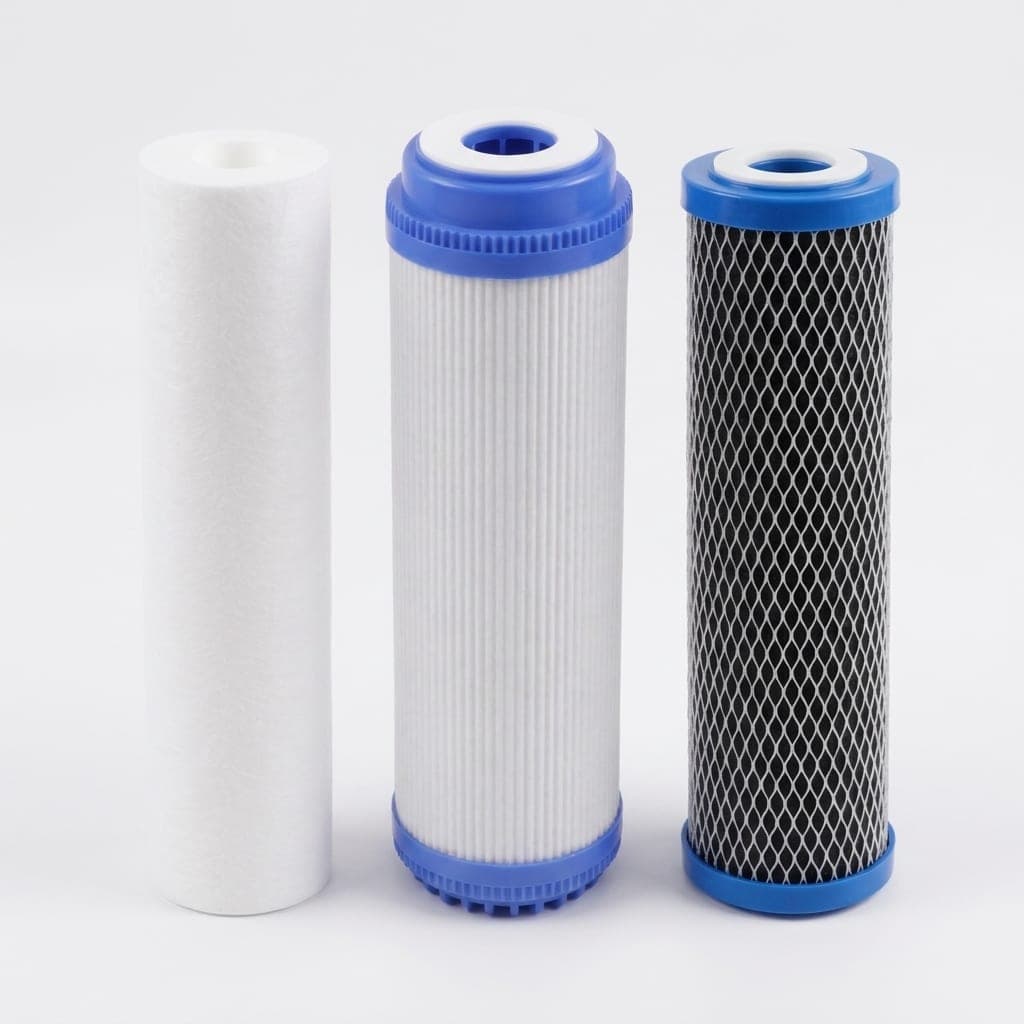
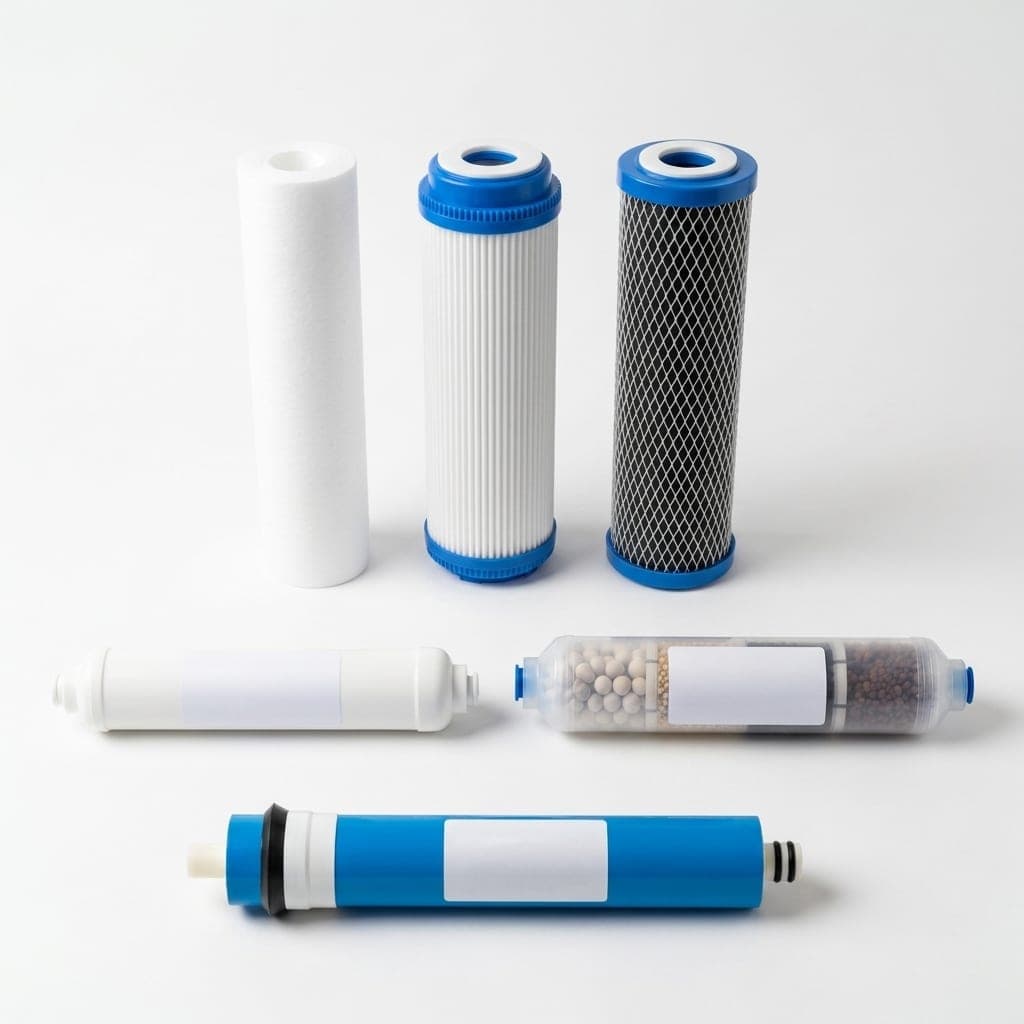
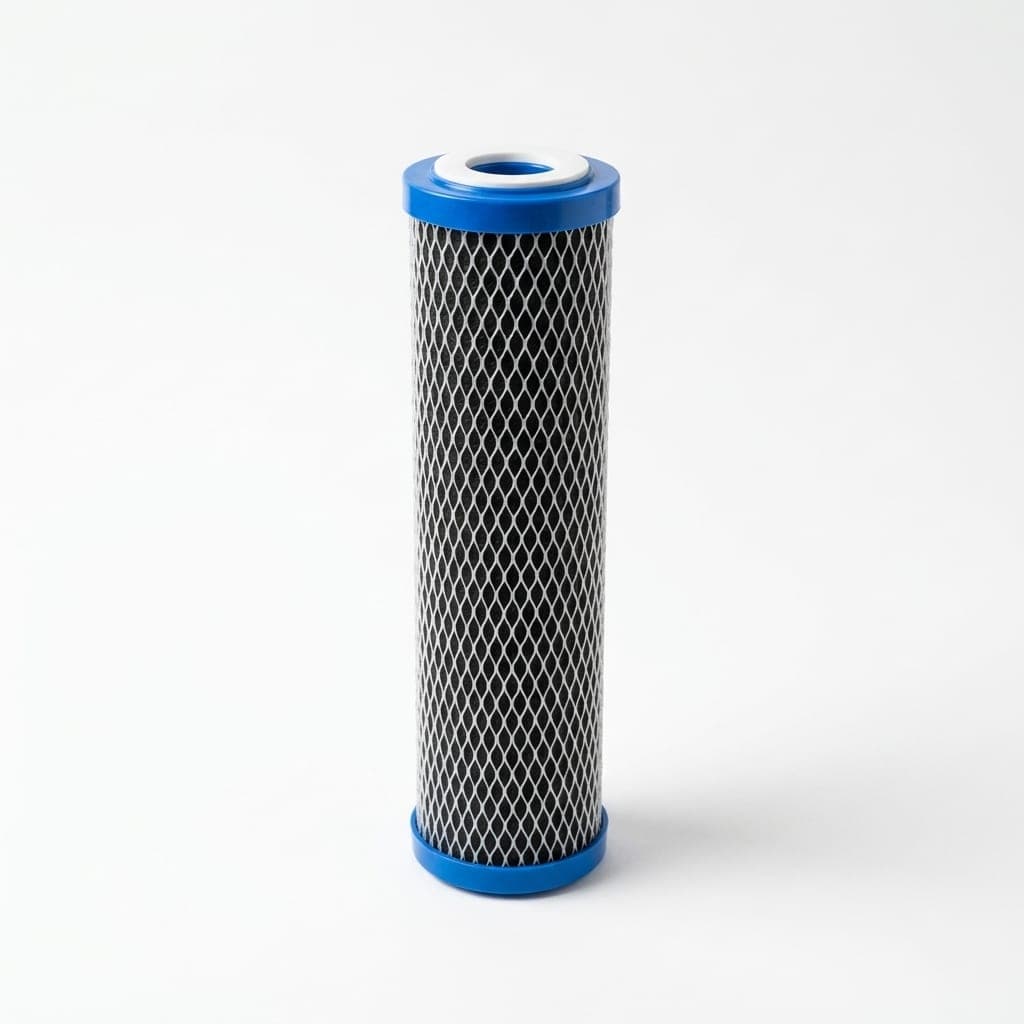
| RO 10 inch sediment, GAC, carbon block (pre-filter kit) | 6 months | 3 to 6 months |
| RO post-carbon and re-mineraliser | 12 months | 12 months |
| RO membrane | 2 to 3 years | 1 to 2 years, by the TDS test |
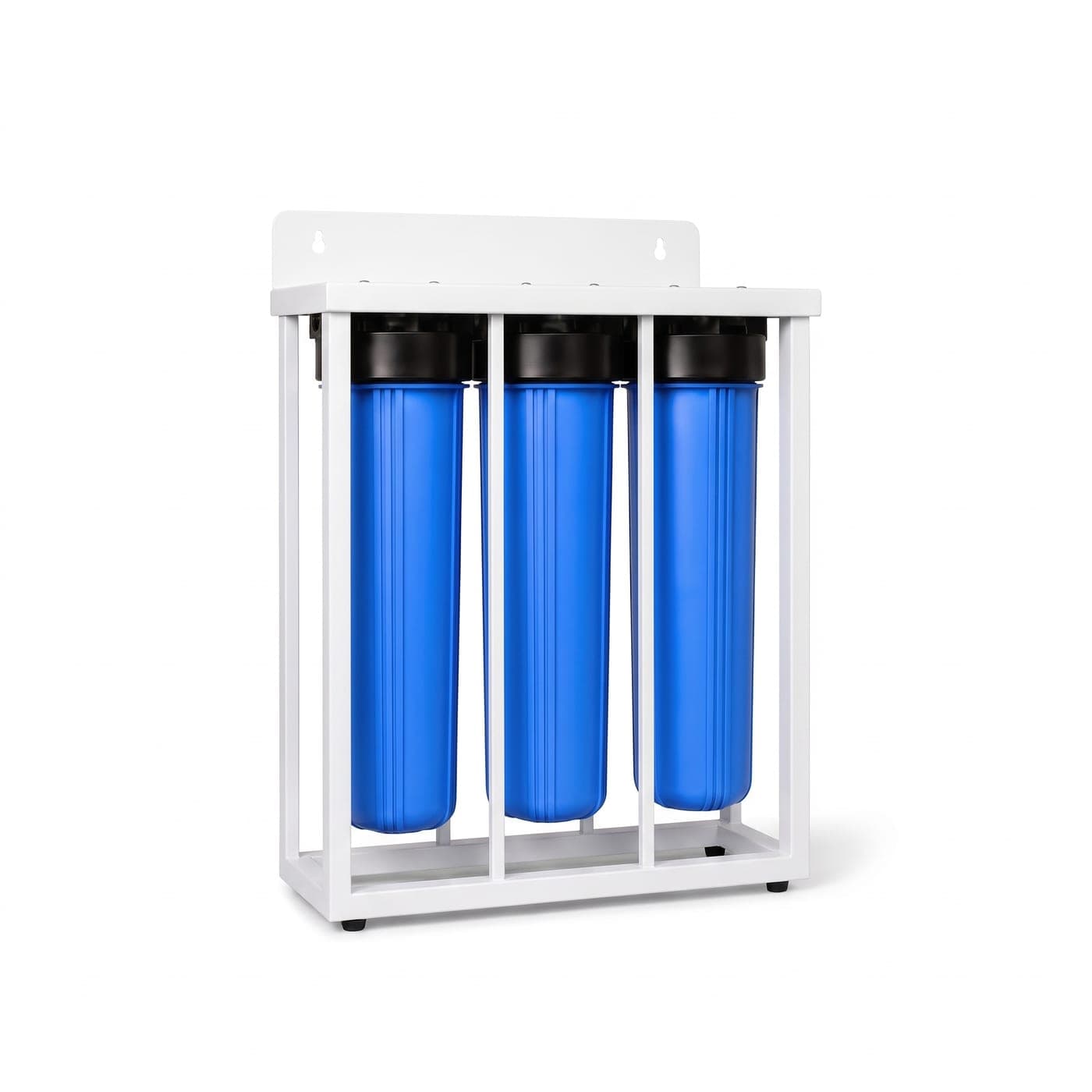
| 20 inch Big Blue 5 micron sediment | 6 months | 3 to 6 months |
| 20 inch Big Blue carbon block or GAC | 6 months | 6 months |
| 20 inch Big Blue 1 micron sediment | 6 months | 3 to 6 months |
| UV lamp | 9 000 hours, about a year of running | Same |
| UV quartz sleeve | Clean every 6 months, replace when scaled or cracked | Clean every 3 months |
| AFM glass media in a vessel | Backwash weekly, media lasts about 10 years | Same |
| Carbon media in a vessel | 1 to 3 years | 1 to 2 years |
| Calcite in a vessel | Top up every 6 to 12 months | Same |
| Softener resin | 8 to 10 years | Same, with a working regeneration |
Why intervals, not looks
A sediment cartridge tells you when it is full: the pressure drops, the shower slows, the cartridge turns brown. Carbon does not. It carries on passing water at full flow long after it has stopped holding chlorine, and the first sign is the swimming-pool smell back in the shower, or in a reverse osmosis system, no sign at all until the membrane dies. The date on the calendar is the only reliable trigger for a carbon stage. Write it on the housing.
Municipal water in Johannesburg
Rand Water arrives chlorinated, with up to about 1 milligram per litre of free chlorine, through mains that are decades old and shedding rust and sediment. Six months is right for the sediment and carbon stages in most suburbs. Pull a cartridge out of a Johannesburg home at five months and the colour explains the interval.
Borehole, tank and rain water
Water from the ground, a tank or a roof carries more sediment and more organic load, and no chlorine. The sediment stages fill first, often at three months, while the carbon lasts its six. A coarse 20 or 50 micron stage ahead of the unit, or a media vessel with AFM, takes the load and lets the cartridges run their full interval. The 1 micron stage ahead of a UV lamp is not optional on these supplies: cloudy water shades the organisms from the light.
Signs that bring a change forward
- The shower or the RO tank slows: the sediment stage is full.
- Chlorine smell returns: the carbon is saturated.
- The water tinges after rain on a borehole or tank supply: the sediment stage has blown through.
- A pressure gauge either side of a whole-house unit reads 0.7 bar apart with a tap running: the cartridges are full, whatever the date.
- The RO water tastes flat or faintly salty: test the membrane.
A calendar that works
Pick two dates a year, six months apart, and change every six-monthly cartridge in the house on those dates: the RO pre-filters and the whole-house set together. Once a year, at one of the two, add the inline cartridges, the UV lamp and a sleeve clean. Every second or third year, the membrane. Keeping the next change on the shelf is what makes the date stick: the two-set box and the full service kit exist for that reason.
Questions
Can I stretch the interval if the water looks fine?
On a sediment stage, a little. On a carbon stage, no: it is spent before it looks it, and in an RO system the membrane pays for it.
Does a bigger household change more often?
A whole-house set is rated by litres, so a six-person house on a borehole may need four months where a couple on municipal water gets six. The pressure gauges give the honest answer.
Which stage goes first on a borehole?
The 5 micron sediment. Change it on its own between full services; a 3-pack is the economical way to keep spares.