How to change the filters on a reverse osmosis system, in fifteen minutes
Three cartridges, one spanner, a bowl and fifteen minutes. The order they go in, the two things people get wrong, and the calendar that keeps the membrane alive.
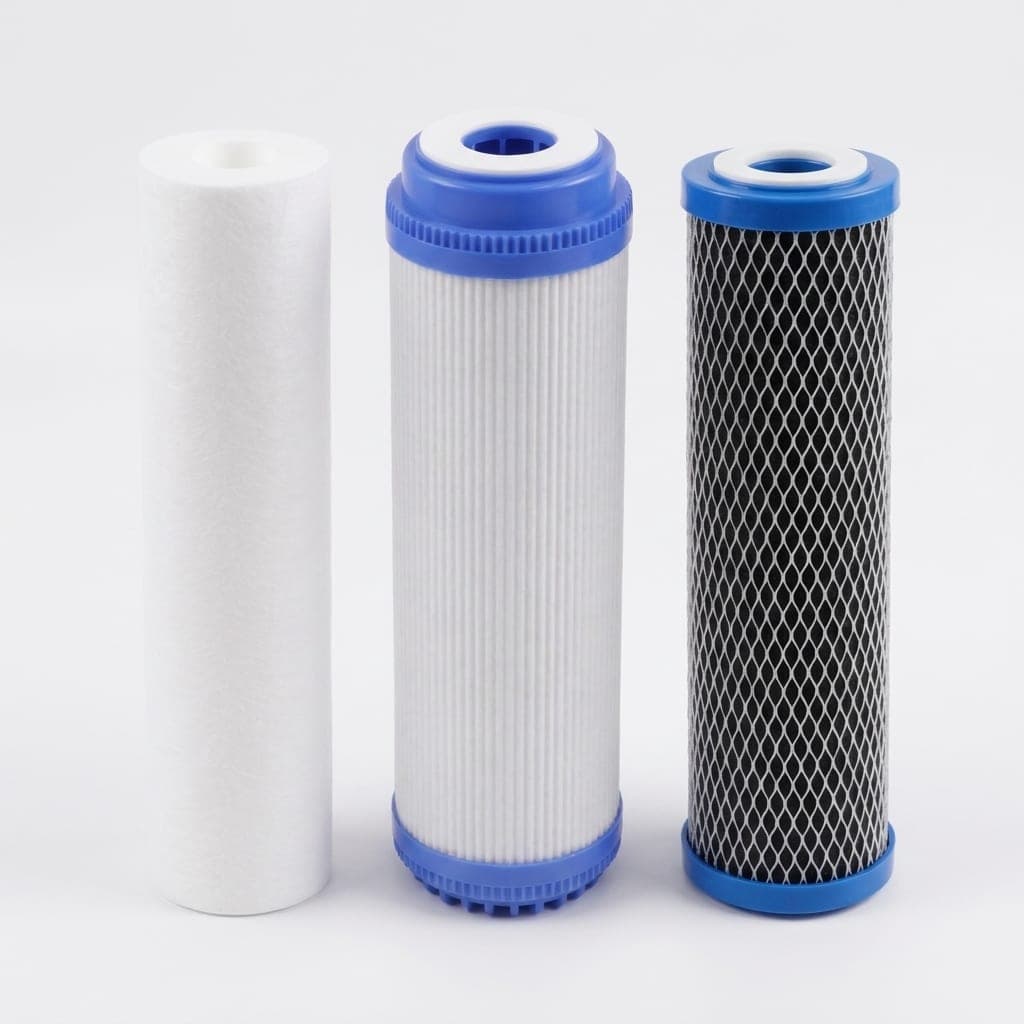
Changing the three pre-filters on an under-sink reverse osmosis system takes about fifteen minutes and needs the housing spanner that came with the unit, a bowl and a towel. It is due every six months on municipal water. Here is the order, the steps, and the two mistakes that cost people a membrane.
What you need
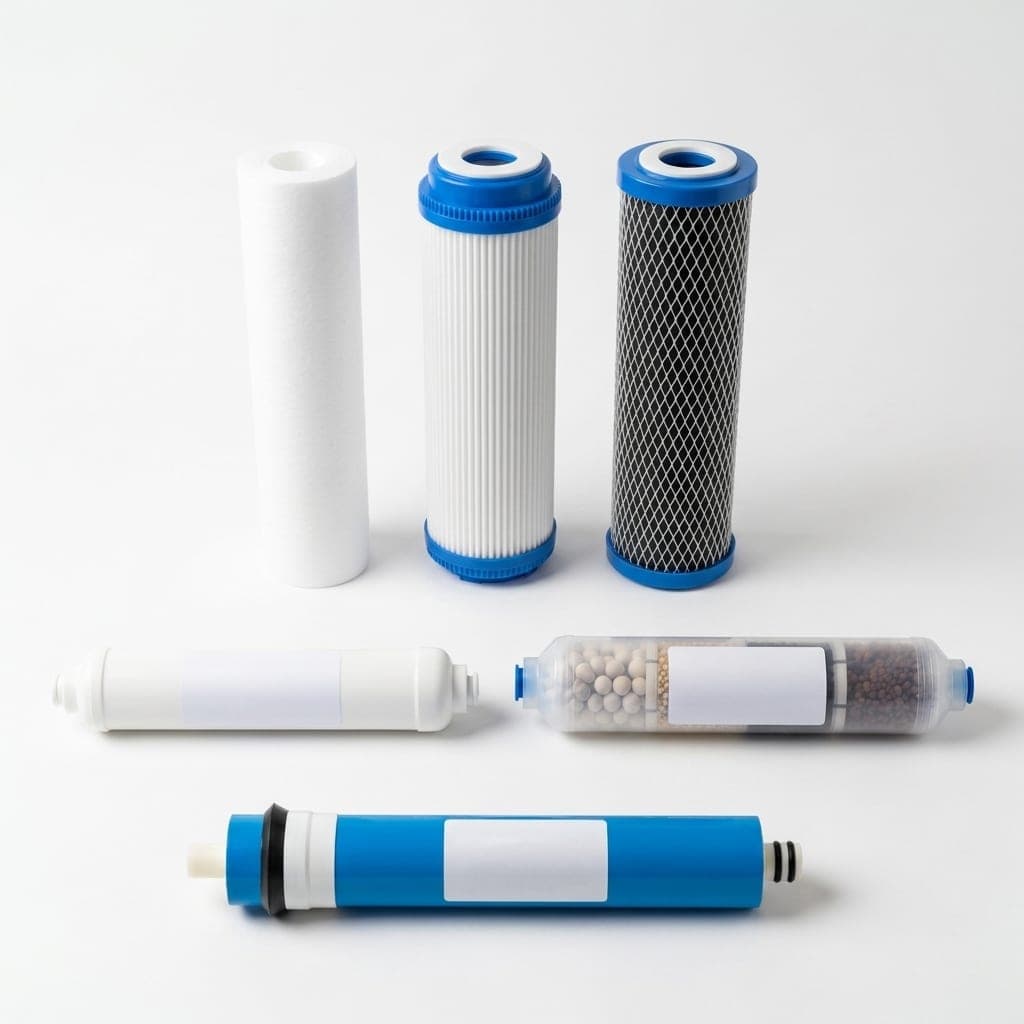
- The three cartridges: 10 inch 5 micron sediment, 10 inch GAC and 10 inch carbon block. The pre-filter kit is exactly those three.
- The plastic housing spanner. If it has gone missing, a strap wrench works.
- A bowl for the water in the housings, a towel, and clean hands.
Which cartridge goes where
| Stage | Cartridge | Job | Change |
|---|---|---|---|
| 1, first housing | 5 micron sediment | Sand, rust and silt, so the carbon stays clean | 6 months |
| 2, second housing | Granular activated carbon | Chlorine, chemical taste and smell | 6 months |
| 3, third housing | Carbon block | The finer chemical pass, and the membrane's protection from chlorine | 6 months |
| 4, long housing | RO membrane | Everything dissolved | 2 to 3 years |
| 5, inline | Post-carbon | Final taste pass after the tank | 12 months |
| 6, inline | Re-mineraliser | Calcium and magnesium back in | 12 months |
Water enters at the first housing and leaves the third towards the membrane. On most systems the housings sit in a row with the inlet on the left; if yours is not labelled, follow the tube from the feed valve.
The fifteen minutes, step by step
- Close the feed valve on the cold water line (the small tap on the saddle connector) and the valve on top of the tank.
- Open the RO tap and leave it open. The pressure drops and the tap runs dry.
- Put the bowl under the first housing. Fit the spanner and turn the housing clockwise as you look up at it from below; it undoes to the right from underneath. Lower it carefully; it is full.
- Take the old cartridge out, note which way up it sat, and rinse the housing.
- Drop the new sediment cartridge in. The 10 inch cartridges have no top or bottom, except the carbon block, which has a gasket end that goes up against the cap.
- Check the large O-ring in the housing lip. Wet it with water, seat it, and screw the housing back hand-tight. Hand-tight is tight enough; the spanner is for undoing.
- Repeat for the second housing with the GAC and the third with the carbon block.
- Open the feed valve slowly and watch the three housings for drips. A drip means the O-ring is pinched or dry; undo, reseat, retighten.
- With the tank valve still closed, let the system run to the drain for ten minutes. Then open the tank valve.
- Let the tank fill and run the first full tank down the sink. Grey water on a new carbon block is carbon fines and clears with the first tank.
Write the date on the first housing with a marker. The next change is six months from that date, not from when you remember.
Once a year: the post-carbon and the re-mineraliser
The two inline cartridges after the tank push-fit into the quarter-inch tube. Press the collet in with a fingernail, pull the tube out, swap the cartridge with the arrow pointing towards the tap, and push the tube home until it stops. Flush a tank. Both are in the full service kit, which is the box for the year the membrane is due as well.
Every two to three years: the membrane
The membrane is the long housing. It has its own guide, when to replace an RO membrane, including the TDS test that says whether it is due.
The two mistakes
The carbon block in the first housing. It loads with grit in weeks, saturates early, and the membrane behind it meets chlorine. Sediment first, always.
Stretching six months to a year. The carbon stops holding chlorine long before it looks dirty, and chlorine destroys the membrane film. A six-monthly kit is the cheapest insurance in the house; a membrane every eighteen months is the alternative.
Questions
Why does the housing leak after I put it back?
Nearly always the O-ring: dry, twisted, or sitting on a grain of grit. Undo the housing, wet the ring, seat it flat and screw back hand-tight.
Can I use the system while the tank refills after a change?
Yes, but run the first tank to waste. It carries the carbon fines and the preservative from the cartridges.
Do I need to sanitise the system?
Once a year, at the membrane change, a cap of food-grade hydrogen peroxide in the first housing before fitting the cartridges, run through and flushed, keeps the housings and the tank clean. Not every change.