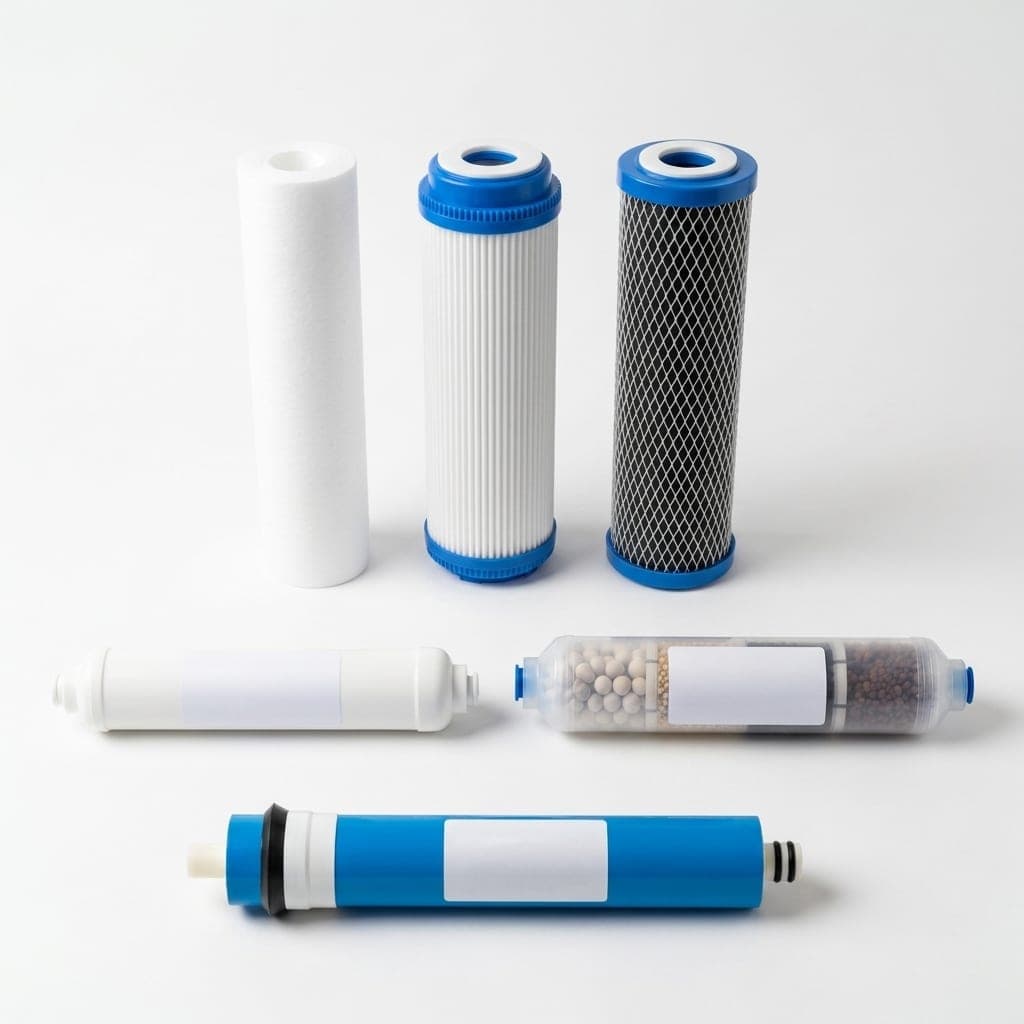
When to replace an RO membrane, and how to tell it is gone
Two to three years is the rule of thumb. A TDS meter and thirty seconds is the proof. Here is the test, the signs that come before it, and what shortens a membrane's life.
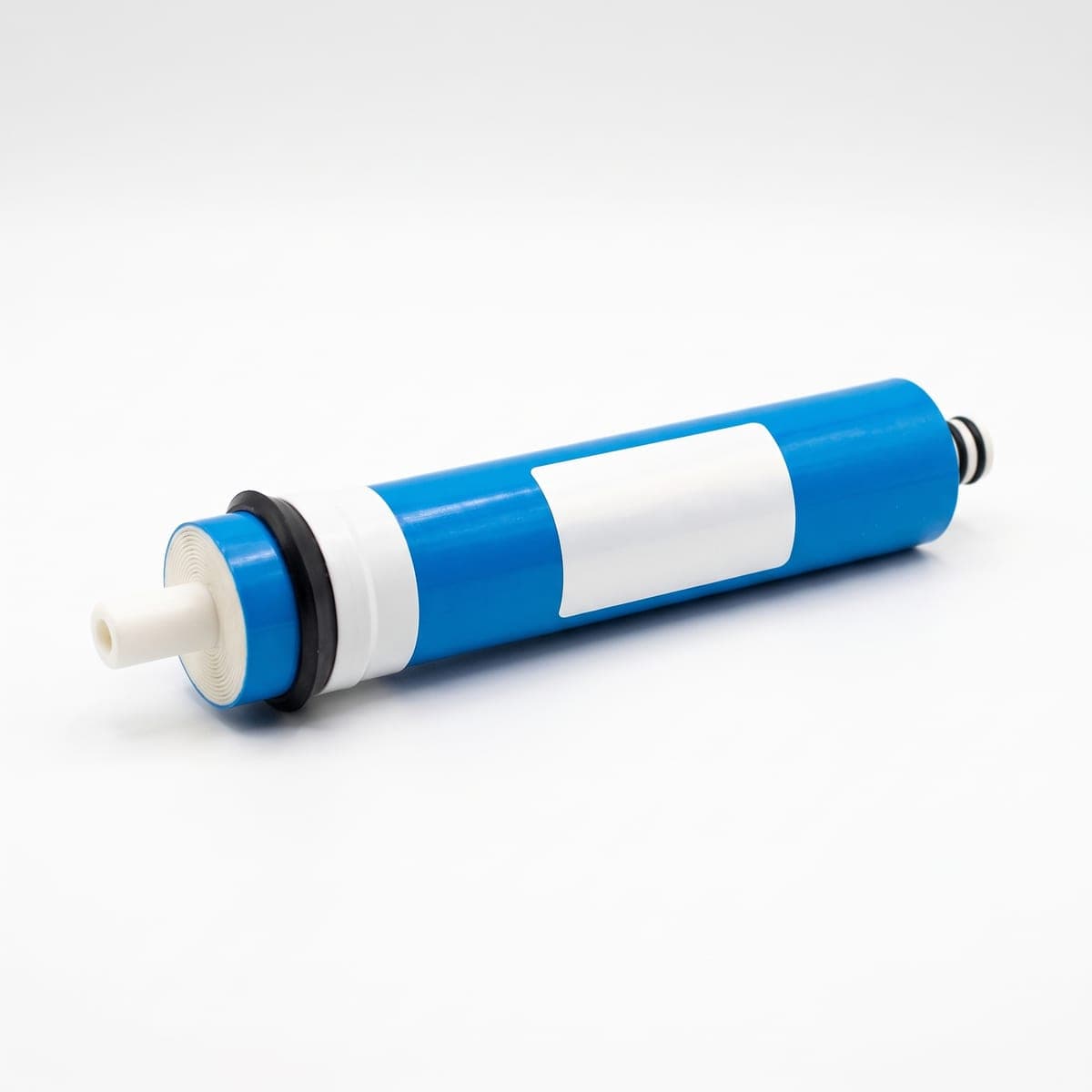
A reverse osmosis membrane in a Johannesburg home on municipal water lasts two to three years, provided the sediment and carbon stages in front of it are changed every six months. The number that says it is done is the rejection rate: when the purified water carries more than about 15 to 20 percent of the tap water's dissolved solids, the membrane has gone and no amount of waiting brings it back.
What the membrane does
The three cartridges ahead of it take out particles, chlorine and taste. The membrane takes out what is dissolved: salts, nitrates, fluoride, heavy metals, microplastics, bacteria and viruses, down to 0.0001 micron. It does this by forcing water through a film that passes water molecules and rejects almost everything else, sending the rejected part to the drain. The 1812 100 GPD membrane in the AquaShield rejects about 96 percent of dissolved solids when new.
The test: a TDS meter and thirty seconds
A TDS meter reads total dissolved solids in parts per million and costs less than a cartridge. The test is two readings.
- Read the tap water. Johannesburg municipal water typically sits between 100 and 250 ppm; borehole water can be anything.
- Read the purified water. On a six-stage system the re-mineraliser adds calcium and magnesium back, so for a true reading of the membrane take the sample from the line before the post-carbon and re-mineraliser if you can reach the tube. If you cannot, read it at the tap when the system is new and watch for the climb from that baseline.
- Rejection is (tap minus purified) divided by tap, times 100. A new membrane gives 95 to 98 percent. Replace it below about 80 to 85 percent.
| Tap water | Purified water | Rejection | Verdict |
|---|---|---|---|
| 180 ppm | 7 ppm | 96% | New, or as good as |
| 180 ppm | 20 ppm | 89% | Working, check again in six months |
| 180 ppm | 35 ppm | 81% | Replace at the next service |
| 180 ppm | 60 ppm | 67% | Gone |
The signs before the number
- The tank fills slowly. A tired membrane passes less water; a tank that took an hour now takes three. A blocked sediment stage does the same thing, so change the pre-filters first and test again.
- The taste changes. Flatter, or faintly salty, because more of the dissolved load is getting through.
- The kettle scales again. Calcium that the membrane used to reject is reaching the glass.
- More water goes to the drain. The ratio of waste to product rises as the membrane fouls.
What kills a membrane early
Chlorine. The membrane film is destroyed by free chlorine, and the carbon block in front of it exists to stop that. A carbon block left in for a year instead of six months lets chlorine through for the second six, and the membrane quietly dies. This is the usual cause of a membrane gone at eighteen months.
Low pressure. Below 2.5 bar the membrane cannot push water through fast enough; it fouls, the tank fills slowly and the rejection drops. Tank supplies and the low end of a suburb need the Turbo with its booster pump.
Hard water. Calcium scales the film. On a borehole with hardness above about 150 ppm as calcium carbonate, a softener ahead of the system is cheaper than membranes.
Sediment. A blown sediment cartridge sends silt onto the membrane face. The 5 micron stage is the membrane's bodyguard.
Changing the membrane
- Close the feed valve and the tank valve. Open the tap and let the pressure out.
- Unscrew the cap of the long membrane housing by hand, or with a cloth for grip.
- Pull the old membrane out with pliers on its stem. Note which end carried the two black O-rings.
- Wet the O-rings of the new one and push it in, O-ring end first, until it seats. It takes a firm push.
- Screw the cap back hand-tight, open the feed, leave the tank valve closed, and let the system run to the drain for thirty minutes to flush the preservative.
- Open the tank valve, let the tank fill, and discard the first two tanks.
Keep the pre-filters on the calendar
A membrane changed on time behind pre-filters changed on time is the cheapest water in the house. The six-monthly kit carries the three stages that protect it; the full service kit adds the membrane, the post-carbon and the re-mineraliser for the year the membrane is due. Both fit the AquaShield and any standard under-sink RO.
Questions
Can a membrane be cleaned instead of replaced?
Industrial membranes are chemically cleaned. A domestic 1812 membrane is not worth it: the cleaning chemicals cost as much as the cartridge and the recovery is partial.
Does a 50 or 75 GPD membrane fit the same housing?
Yes, the 1812 housing takes all three. The 100 GPD fills the tank fastest and is what the AquaShield ships with.
Why does the system make noise after a membrane change?
Air in the housing. Run it to the drain for the thirty-minute flush and it clears; if it continues, check the cap is seated and the O-rings are in place.